
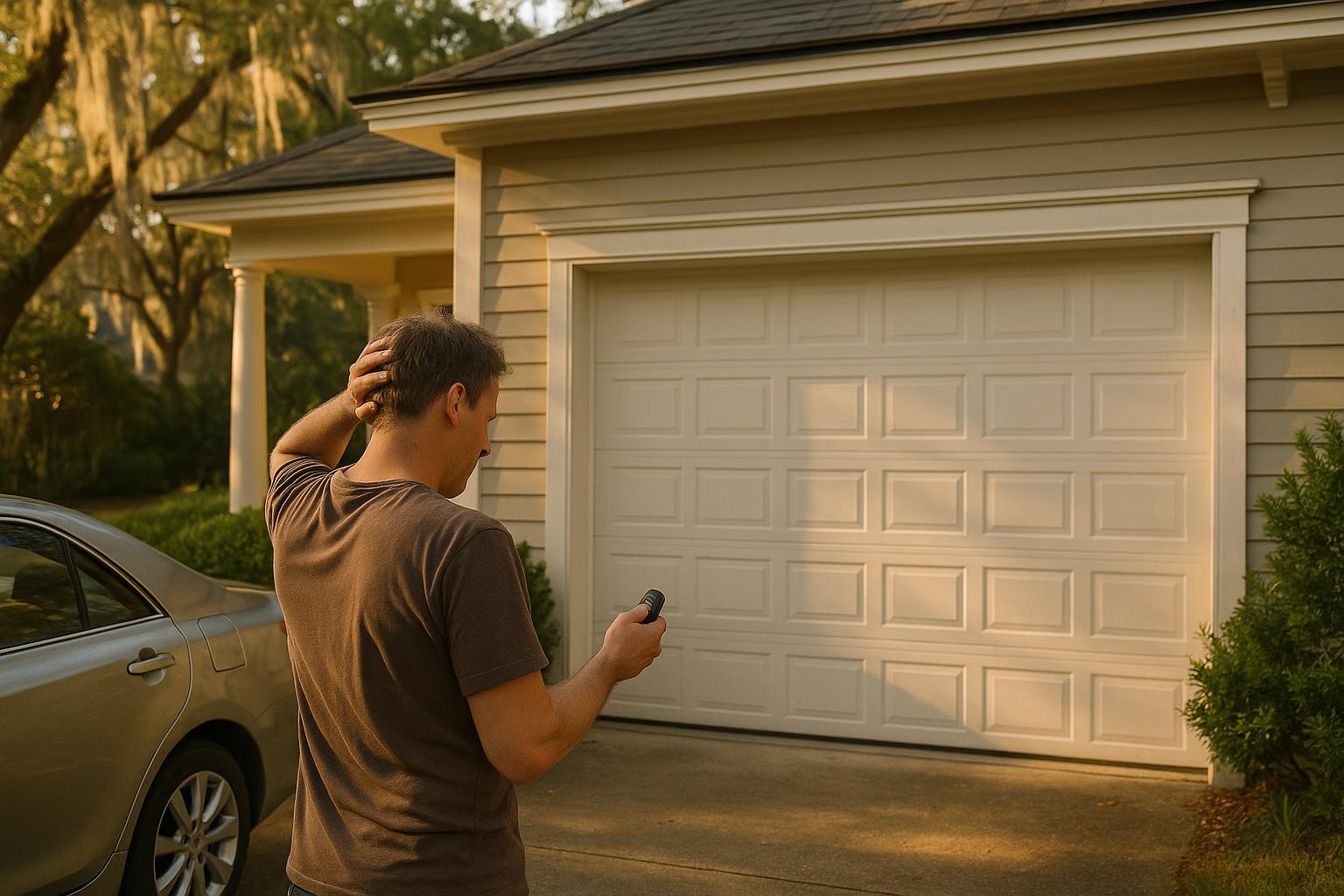
You're Running Late and Your Garage Door Won't Budge
It's a scenario most homeowners dread: you're heading out for work, coffee in hand, and your garage door simply won't open. You press the remote again. Nothing. You try the wall button. Still nothing. Or maybe it starts to move and then stops after a few inches. Whatever the case, you're stuck — and now you're late.
This is one of the most common calls we get at Savannah Garage Door, especially during the cooler months and after stretches of high humidity. The good news is that most causes are fixable, and some you can even troubleshoot yourself before calling a professional. Let's walk through the most likely reasons your garage door won't open and what you should do about each one.
1. Dead Batteries in the Remote
It sounds almost too simple, but this is the number one reason people think their garage door is broken. Remote batteries typically last one to two years, and they tend to die at the worst possible moment.
What to do: Replace the batteries in your remote with fresh ones. If the wall-mounted button inside your garage still operates the door, the remote batteries were almost certainly the issue. Keep a spare set of batteries in your car's glove box so you're never caught off guard.
2. The Photo Eye Sensors Are Misaligned or Dirty
Every modern garage door has two small sensors near the bottom of the door tracks. These photo eye sensors send an invisible beam across the doorway to detect obstructions. If they're misaligned, dirty, or blocked, the door may refuse to close — and in some cases, it won't open properly either.
What to do: Check that both sensors are pointing directly at each other and that the small LED lights on each unit are lit and steady. Wipe the lenses with a soft cloth to remove dust, cobwebs, or moisture. Here in Savannah, humidity and pollen can coat these sensors surprisingly fast, especially in spring and summer.
3. The Door Is Locked or in Manual Mode
Many garage doors have a manual lock — a slide bolt or latch built into the door itself. If someone accidentally engaged it, the opener will strain against a locked door and eventually stop trying. Similarly, if the emergency release cord (the red handle hanging from the track) was pulled, the door disconnects from the opener and switches to manual mode.
What to do: Check for any manual locks and disengage them. If the emergency release was pulled, you'll need to reconnect the door to the opener. Usually this means pulling the release cord back toward the opener and then running a cycle with the remote or wall button so the trolley re-engages.
4. A Broken Torsion Spring
If you heard a loud bang from the garage — almost like a gunshot — sometime before the door stopped working, there's a strong chance one of your torsion springs snapped. These heavy-duty springs do the real work of lifting the door, and when they break, the opener motor simply can't handle the weight alone.
What to do: Look at the springs mounted above the door on a metal shaft. If you see a visible gap or a spring that looks unwound, that's your problem. Do not attempt to replace torsion springs yourself. These are under extreme tension and can cause serious injury. This is a job for a trained technician, and it's one of the most common repair calls we handle across Savannah, Pooler, and Richmond Hill.
5. The Opener Motor Has Burned Out or Overheated
Garage door openers have motors that can overheat, especially if the door has been cycled many times in a short period or if the motor is aging. When the motor overheats, a built-in thermal protector shuts it down temporarily. In older units, the motor may have simply reached the end of its lifespan.
What to do: Wait 15 to 20 minutes and try again. If the motor was just overheated, it should reset on its own. If the door still won't respond, or if you notice a burning smell, it's time to have the opener inspected. Most openers last 10 to 15 years, so if yours is getting up there in age, a replacement might make more sense than a repair.
6. Power Outage or Tripped Circuit Breaker
This one catches people off guard more often than you'd think. A brief power surge overnight — common during Savannah's summer storms — can trip the breaker that feeds your garage door opener without affecting the rest of your home.
What to do: Check your electrical panel for any tripped breakers. Flip the breaker for the garage off and back on. If it trips again immediately, there may be a wiring issue that needs professional attention.
7. Damaged or Off-Track Rollers
Over time, the rollers that guide your garage door along the tracks can wear out, crack, or pop out of the track entirely. When this happens, the door may get stuck partway or refuse to move at all. You might also hear grinding or scraping sounds when you try to operate it.
What to do: Visually inspect the rollers and tracks on both sides of the door. If you see a roller that's come out of the track or one that's visibly cracked, avoid forcing the door open. Running the door on damaged rollers can bend the tracks and turn a minor repair into a much bigger job.
When to Call a Professional
Some of these issues — like dead batteries or dirty sensors — are easy fixes you can handle on your own. But anything involving springs, tracks, cables, or the opener motor itself is best left to a professional. Garage doors are the largest moving component in most homes, and working on them without the right tools and training can be dangerous.
At Savannah Garage Door, we help homeowners and businesses across Savannah, Rincon, Garden City, and Port Wentworth get their doors working again quickly and safely. Whether it's a broken spring, a failing opener, or something you just can't figure out, our team can diagnose the problem and get it fixed — usually the same day.
A Few Tips to Prevent Morning Surprises
- Test your door monthly. Run it through a full open-and-close cycle and listen for anything unusual.
- Replace remote batteries annually. Don't wait for them to die at the worst time.
- Keep sensors clean. A quick wipe every few weeks goes a long way, especially during pollen season.
- Schedule annual maintenance. A professional tune-up catches worn parts before they fail and keeps your door running reliably year-round.
A garage door that won't open is more than an inconvenience — it can affect your security, your schedule, and your peace of mind. If your door is giving you trouble, don't ignore it. The sooner you address the issue, the less likely it is to turn into a costly repair down the road.