
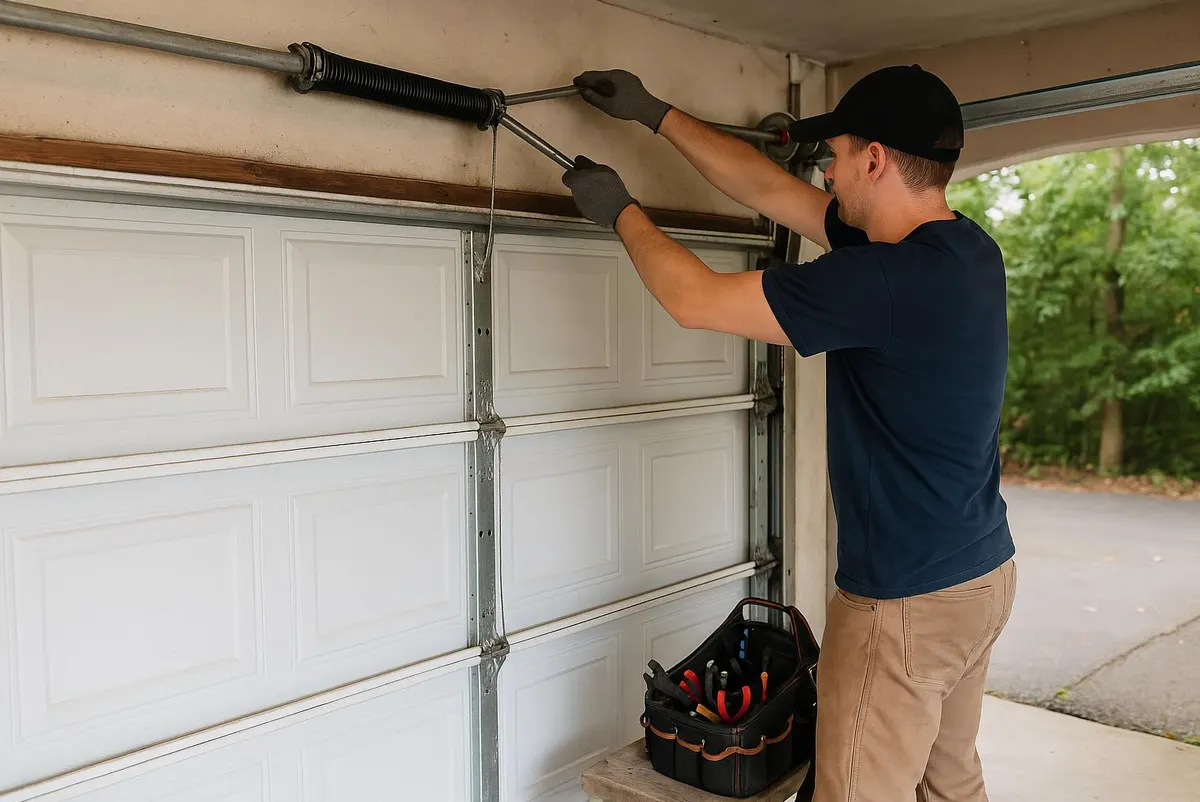
If your garage door opener has gotten louder gradually over months, the fix is almost always mechanical wear and loose hardware, not a dying motor. The exceptions: a sudden grinding or banging noise that started overnight, a burning smell, or the opener straining and reversing mid-cycle. Those point to a motor, gear, or spring problem and are not DIY territory. Everything else on this list, you can usually tackle yourself before deciding whether a belt-drive swap is worth it.
Tools You'll Need
- Socket set and adjustable wrench
- Ladder rated for ceiling height work
- White lithium grease or a silicone-based garage door lubricant (not WD-40, which attracts grit)
- Rubber isolation washers or an anti-vibration pad kit
- Flashlight
- Replacement nylon rollers (if yours are still metal)
Step-by-Step: Cheapest Fixes First
- Tighten every bolt on the unit and rail. Vibration loosens mounting bolts over time, and that's often the single biggest source of rattle. Go bolt by bolt along the motor unit, the rail, and the brackets anchoring it to the ceiling joists. This is a 15-minute homeowner job with a wrench.
- Lubricate moving metal parts. Rollers, hinges, and the drive rail (chain or screw drive) all benefit from a light coat of white lithium grease every few months. Skip the springs entirely; lubricating them is a job for a technician, since a slip there can cause injury. Humid stretches here mean rust creeps into hardware faster than in drier climates, so this step matters more than it would elsewhere.
- Check and replace worn rollers. If your door still has steel rollers, that metal-on-metal contact is a major noise source. Swapping to nylon rollers is a straightforward homeowner project done one at a time, door open, with the opener unplugged.
- Install vibration-isolation hardware. A rigid metal-to-metal connection between the motor unit and the ceiling bracket transmits every vibration into the joists above your garage, which amplifies sound through the whole structure. Rubber isolator pads or a dedicated anti-vibration kit (sold for most chain and belt openers) cut that transfer noticeably. This is a simple install with a ladder and a socket wrench.
- Adjust chain tension. A chain that's too loose slaps against the rail with every open and close. Most openers have a tensioning bolt on the rail; consult your manual, since over-tightening puts stress on the motor. This is homeowner-doable but go slowly and recheck after a few cycles.
Where to Stop and Call a Technician
- Worn sprocket or gear teeth. If the chain tension is fine but you're still getting a grinding or clicking sound at the motor end, the sprocket teeth may be worn down. Replacing it means opening the motor housing, which is where we'd recommend bringing in a technician rather than guessing at part compatibility.
- Loose or worn spring hardware. A popping or banging noise that tracks with the door's full weight, not just the opener running, often traces back to spring mounting hardware, not the opener at all. Springs are under heavy tension and are a technician-only repair.
- Swapping chain drive for belt drive. If you've done the cheap fixes and the opener is still noisy simply because it's a chain-drive unit on an aging rail, a belt-drive conversion is the real long-term fix. Rubber belts run almost silently compared to metal chains, and they hold up well in humid, high-pollen conditions where metal chains tend to collect grit and rust faster. This isn't a bolt-on part, it usually means replacing the rail and trolley assembly or the whole opener unit, and it's worth having a technician handle the wiring, travel limits, and safety sensor alignment that come with it.
Why Fall Is a Good Time to Deal With This
After a season of heavy rain and the tail end of hurricane remnants moving through, garages tend to collect moisture, pine debris, and grit along the rail and rollers, all of which make noise worse. Cooler, drier fall weather is a good window to get in there, clean the rail, re-lubricate, and catch any rust before winter's occasional ice snaps bring their own stress on hardware. Doing this now also means your opener isn't struggling through the noisiest, most humid months of next summer.
When to Call Savannah Garage Door
If you've tightened hardware, lubricated the rail, and the noise is still there, or if you're hearing grinding at the motor, popping tied to the door's weight, or you're ready to convert to a belt-drive system, that's where we come in. Our Garage Door Opener Service covers diagnosing worn gears, sprockets, and motor issues, and our team can walk you through whether a belt-drive swap or a full opener replacement makes more sense for your setup. We also offer Garage Door Maintenance visits that cover lubrication, hardware checks, and rail cleaning in one pass, which is a good option if you'd rather not climb the ladder yourself every few months.
If your opener in Savannah, Pooler, Richmond Hill, Rincon, Garden City, Port Wentworth, Bloomingdale, or Thunderbolt is still too loud after the easy fixes, give Savannah Garage Door a call. We'll find the real source of the noise and get your door running quietly again.