
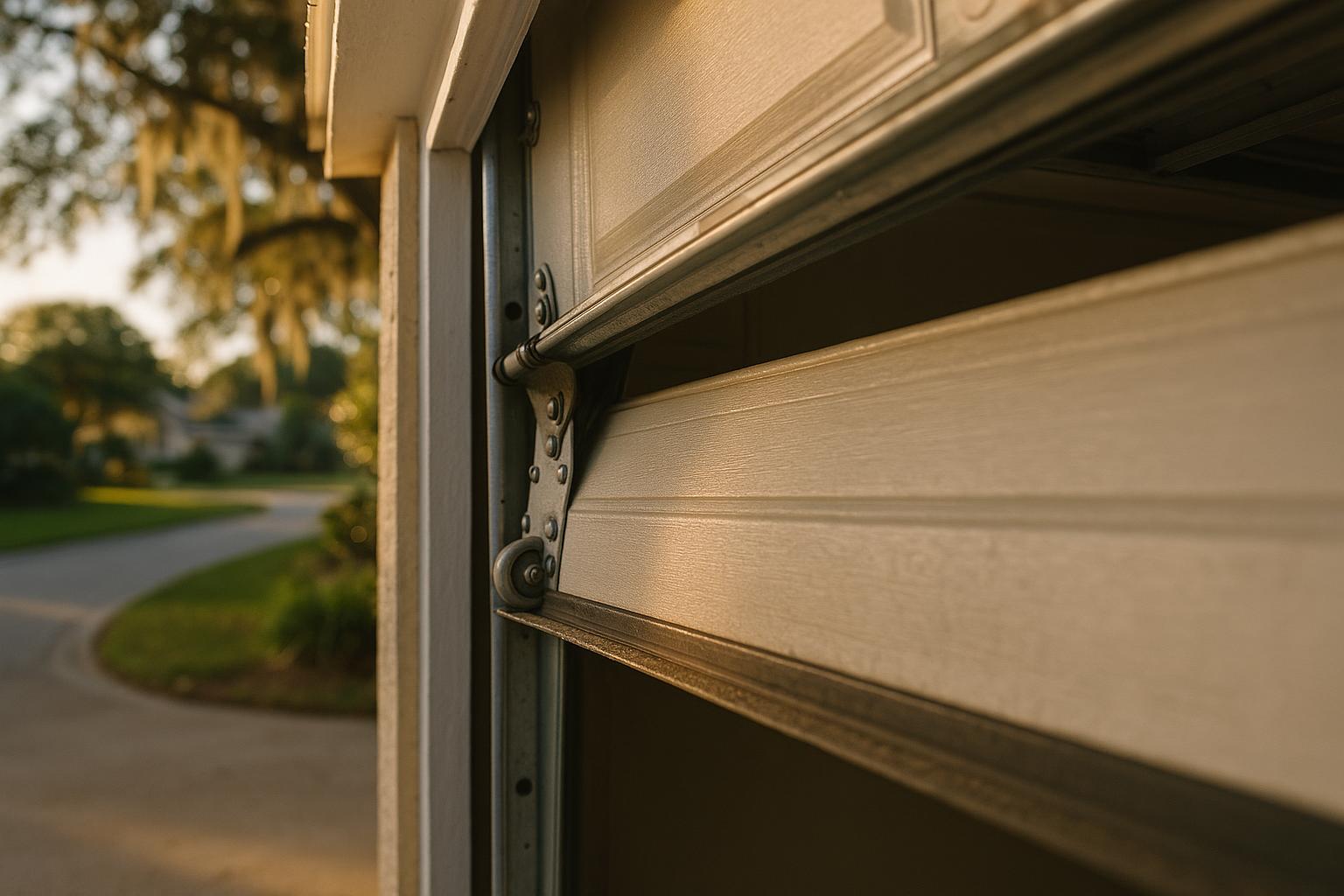
Your Garage Door Shouldn't Sound Like That
You press the button on your garage door opener, and instead of the smooth, quiet hum you're used to, you hear grinding, squealing, rattling, or a loud bang. It's unsettling, and for good reason — unusual garage door noises are almost always a sign that something needs attention.
Here in Savannah, our humid subtropical climate puts extra stress on garage door components. Moisture accelerates rust, heat causes metal to expand, and salt air near the coast can corrode hardware faster than you'd expect. If your garage door has started making noises it didn't used to make, don't ignore it. What starts as a minor annoyance can quickly turn into a costly repair — or a safety hazard.
Let's break down the most common garage door noises, what's causing them, and what you should do about each one.
Grinding or Scraping Sounds
A grinding or scraping noise when your garage door opens or closes usually points to one of two issues:
- Worn rollers: Garage door rollers guide the door along the tracks. Over time, especially with steel rollers, they wear down, develop flat spots, or lose their lubrication. When metal grinds against metal, you'll hear it clearly.
- Misaligned tracks: If the vertical or horizontal tracks have shifted even slightly, the door can scrape against them as it moves. This creates a harsh grinding sound and can also cause uneven wear on the door panels.
The fix for worn rollers is straightforward — they need to be replaced. Nylon rollers are a popular upgrade because they're significantly quieter and don't require as much lubrication. If the tracks are misaligned, a technician can realign them and tighten the mounting brackets to prevent it from happening again.
Squealing or Squeaking
High-pitched squealing is one of the most common garage door complaints we hear from homeowners in Savannah and Pooler. It's also one of the easiest to address — most of the time.
Squealing typically means your garage door's moving parts are starving for lubrication. The hinges, rollers, springs, and bearings all need periodic lubrication to operate smoothly. Savannah's humidity can actually work against you here, because moisture displaces lubricant and promotes rust on exposed metal surfaces.
What You Can Do
Apply a silicone-based or lithium-based garage door lubricant to the following components:
- Hinges (where they pivot)
- Rollers (the bearings, not the track surface)
- Torsion springs
- The opener's chain or screw drive
Avoid using WD-40 as a long-term lubricant — it's great as a solvent and for loosening stuck parts, but it evaporates quickly and doesn't provide lasting protection. A proper garage door lubricant will stay in place much longer.
If lubrication doesn't solve the squealing, the issue may be worn-out bearings in the rollers or the torsion spring assembly, which should be inspected by a professional.
Rattling or Vibrating
A rattling garage door often sounds worse than it is. In many cases, the cause is simply loose hardware. Every time your garage door cycles up and down, vibrations gradually loosen nuts, bolts, and screws throughout the system.
Check and tighten the following:
- The bolts on the track brackets that mount to the wall and ceiling
- The hinges connecting each door panel
- The fasteners on the garage door opener unit itself
- The chain tension on chain-drive openers (a loose chain is a common rattling culprit)
If everything is tight and the rattling persists, the problem could be worn hinges that have developed play in their joints, or the opener's mounting system may need anti-vibration pads to dampen the noise.
Loud Banging or Popping
A single loud bang when the door starts moving — especially in the morning — is often caused by the torsion springs. As temperatures drop overnight, metal contracts. When the opener activates, the springs release stored energy suddenly, creating a popping or banging sound.
This is relatively common during Savannah's cooler months, but it can also indicate that the springs are under excessive tension or are beginning to weaken. If you hear a loud bang followed by the door refusing to open, a spring has likely broken. Never attempt to repair or replace torsion springs yourself. They're under extreme tension and can cause serious injury. This is always a job for a trained garage door technician.
Rumbling or Shaking from the Opener
If the noise seems to be coming from the garage door opener unit mounted to your ceiling rather than the door itself, the opener may be the issue. Older chain-drive openers are inherently louder than modern belt-drive models. But if your opener has gotten noticeably louder over time, it could mean:
- Worn gears inside the opener: Most openers use nylon or plastic gears that wear down with use. When the teeth strip, you'll hear a grinding or humming sound, and the door may stop moving altogether.
- A failing motor: An opener motor that's struggling will often produce a strained humming or buzzing noise, especially if the door is heavy or the springs aren't properly balanced.
- Loose mounting hardware: The opener is bolted to a bracket on your ceiling. If those connections loosen, the entire unit can vibrate and amplify noise throughout the garage.
If your opener is more than 15 years old and making excessive noise, it may be more cost-effective to replace it with a newer, quieter belt-drive model rather than continuing to repair aging components.
When to Call a Professional
Some garage door noises have simple DIY solutions — tightening a bolt, applying lubricant, or adjusting the chain tension. But many noises point to problems that require professional tools, replacement parts, and expertise to fix safely.
You should call a garage door professional if:
- The noise is accompanied by the door moving unevenly or getting stuck
- You suspect a spring issue (popping, banging, or a door that feels unusually heavy)
- The opener makes noise but the door doesn't move
- You've lubricated and tightened everything but the noise persists
- The door visibly shakes, jerks, or hesitates during operation
Ignoring these warning signs can lead to a complete door failure, which is not only inconvenient but can also compromise the security of your home.
Keep Your Garage Door Quiet and Running Smoothly
Regular maintenance is the best way to prevent noisy garage door problems before they start. We recommend having your garage door professionally inspected and serviced at least once a year — twice if you use it multiple times a day or if your home is in a high-humidity area like Richmond Hill, Garden City, or anywhere along the Savannah coast.
At Savannah Garage Door, we help homeowners and businesses across Savannah, Pooler, Rincon, and Port Wentworth keep their garage doors operating safely and quietly. Whether you need a quick tune-up, a roller replacement, or a full opener upgrade, our team is here to help.
Don't let a noisy garage door turn into an expensive repair. If something doesn't sound right, give us a call — we'll diagnose the problem and get it fixed before it gets worse.