
Start With the Rule of Thumb
As a general rule, the type of sound tells you where the problem lives: grinding means metal is wearing against metal, squealing means something needs lubrication, popping means tension or a stuck track is releasing suddenly, and rattling means hardware has worked itself loose. The exceptions are common, though. A worn roller can squeal before it ever grinds. A spring under stress can pop quietly for weeks before it bangs loudly on the day it breaks. And in this part of Georgia, heavy rain, pine sap, and pollen buildup can make a simple lubrication problem sound like something much worse. Treat the noise as a clue, not a diagnosis, and check the usual suspects in order.
Grinding: Metal Wearing on Metal
Grinding usually sounds like a low, continuous scrape that gets louder as the door moves, often worse at the top or bottom of the travel where rollers meet bent or dirty track.
- Rollers first. A technician checks the rollers before anything else. Steel rollers without nylon tires wear down over time and start grinding directly against the track, especially once grit from pine debris or construction dust packs into the wheel grooves.
- Bearing plates and hinges next. If the rollers look fine, the bearings inside the hinges or end bearing plates are the next suspect. Humidity and rain exposure corrode these faster than in drier climates, and corroded bearings grind as they turn.
- Opener gear last. If the noise only happens when the opener is running, the drive gear inside the motor housing may be stripped. This is a cheaper, internal part but requires opening the unit to confirm.
The fix for worn rollers is replacement with nylon rollers, which run quieter and tolerate moisture better than steel. Bearing issues mean replacing the plates or hinges outright rather than lubricating them, since corroded metal won't smooth out again. A stripped opener gear is a parts replacement inside the opener housing, not a full unit swap.
Squealing: Friction and Dry Metal
Squealing is a higher-pitched sound, often intermittent, that shows up most on the first cold morning of the season or after the door has sat unused for a while.
- Lubrication is checked first, because it's the most common cause and the easiest to confirm. Rollers, hinges, and the torsion spring itself all need periodic lubrication, and salt air plus humidity break down standard grease faster than in dry climates.
- Roller bearings are next if fresh lubricant doesn't quiet things down. A dry bearing will squeal even with oil on the outside, because the noise is coming from inside the wheel.
- Belt-drive openers can squeal if the belt has slipped off true or lost tension, which shows up as a squeal timed exactly with the opener's motion rather than the door's.
The fix for most squealing is a proper garage-door-specific lithium or silicone lubricant applied to hinges, rollers, and springs — not WD-40, which washes out quickly in humid conditions and attracts grit. If lubrication doesn't resolve it, roller replacement is the next step, and belt tension adjustment handles the opener-related cases.
Popping: Tension Releasing Where It Shouldn't
Popping is a sharper, sudden sound — sometimes one pop per cycle, sometimes a single loud bang that stops the door mid-motion.
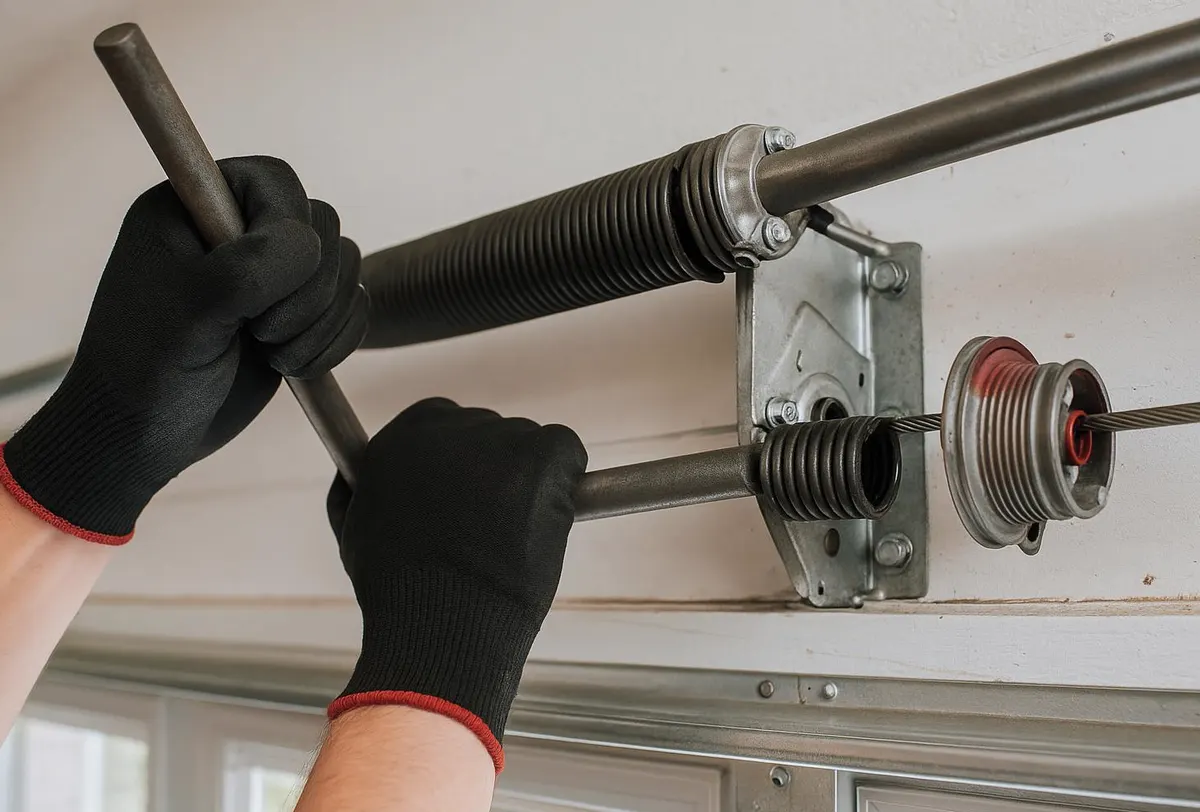
- Torsion springs are checked first, because a spring under uneven tension can pop audibly before it fails outright. A full bang, followed by the door refusing to open or feeling suddenly heavy, usually means the spring has broken. This happens more often during the hot, humid stretch of summer and again during any hard freeze, since both extremes stress the metal.
- Track obstructions are next if the popping is softer and repeats at the same point in the door's travel. Pine needles, swollen wood trim from rain, or a section of track knocked slightly out of alignment during storm season can all cause a brief catch-and-release pop.
- Panel flex is checked last. Older steel doors can pop slightly as panels expand and contract with temperature swings, particularly after a sudden drop following a hot day.
A broken spring is never a DIY repair — it's under enough tension to cause serious injury, and the fix is a full spring replacement matched to the door's weight and cycle count. Track issues are resolved by clearing debris and realigning the track, which also prevents the roller wear described above. Panel flex is usually cosmetic and doesn't need a fix unless it's paired with visible cracking.
Rattling: Loose Hardware
Rattling is a looser, metallic shaking sound, often most noticeable on garage doors mounted near wood framing that moves slightly with seasonal moisture.
- Nuts, bolts, and hinges are checked first, since vibration from daily use works fasteners loose over time, and storm-force wind loads can accelerate that in a single season.
- Chain or belt tension on the opener is next — a loose chain slaps against the opener rail with every cycle.
- Track mounting brackets are checked last, since a bracket that's pulled slightly away from the frame will rattle the whole track during operation.
The fix for loose hardware is straightforward tightening with the correct tools, though some bolts need replacing if the holes have worn oval. Chain tension is adjusted at the opener's tensioning bracket. Loose track brackets need to be re-secured into solid framing, which matters more here than in drier regions since repeated moisture exposure can weaken the wood behind the bracket over time.
When to Call Savannah Garage Door
If tightening hardware and applying fresh lubricant doesn't quiet things down within a day or two, or if you hear a loud pop followed by a door that won't move, stop using the door and call us. Our Garage Door Maintenance visits include a full inspection of rollers, hinges, and bearing plates so we can catch grinding and squealing before they turn into a stuck door, and our Spring Replacement service handles broken or failing springs safely, with parts matched to your door's exact tension needs.
If your garage door in Savannah, Pooler, Richmond Hill, or anywhere nearby is making noise you can't place, give Savannah Garage Door a call — we'll track down the source and fix it before it leaves you stuck.