
You hit the button on your way out the door — nothing. You try again, hold it a little longer this time, and still the door sits there like it's ignoring you. Maybe it hums but doesn't move. Maybe it's dead silent. Maybe it opens two inches and stops. Whatever the exact symptom, the panic is the same: you're late, your car is trapped, and you have no idea where to start.
Here's the good news. A technician doesn't guess when a door won't open — they work through a short list of causes in a specific order, because some are far more common than others and most take under two minutes to rule out. You can run through the same list yourself before you call anyone.
First, notice exactly what the door is doing
The symptom tells you a lot before you even touch anything:
- Total silence, no response from the opener at all — usually power.
- The opener light turns on but the motor does nothing — often the remote, the wall switch, or the safety sensors.
- A hum or click, but the door doesn't move — points toward the trolley, the gear inside the opener, or a stuck track.
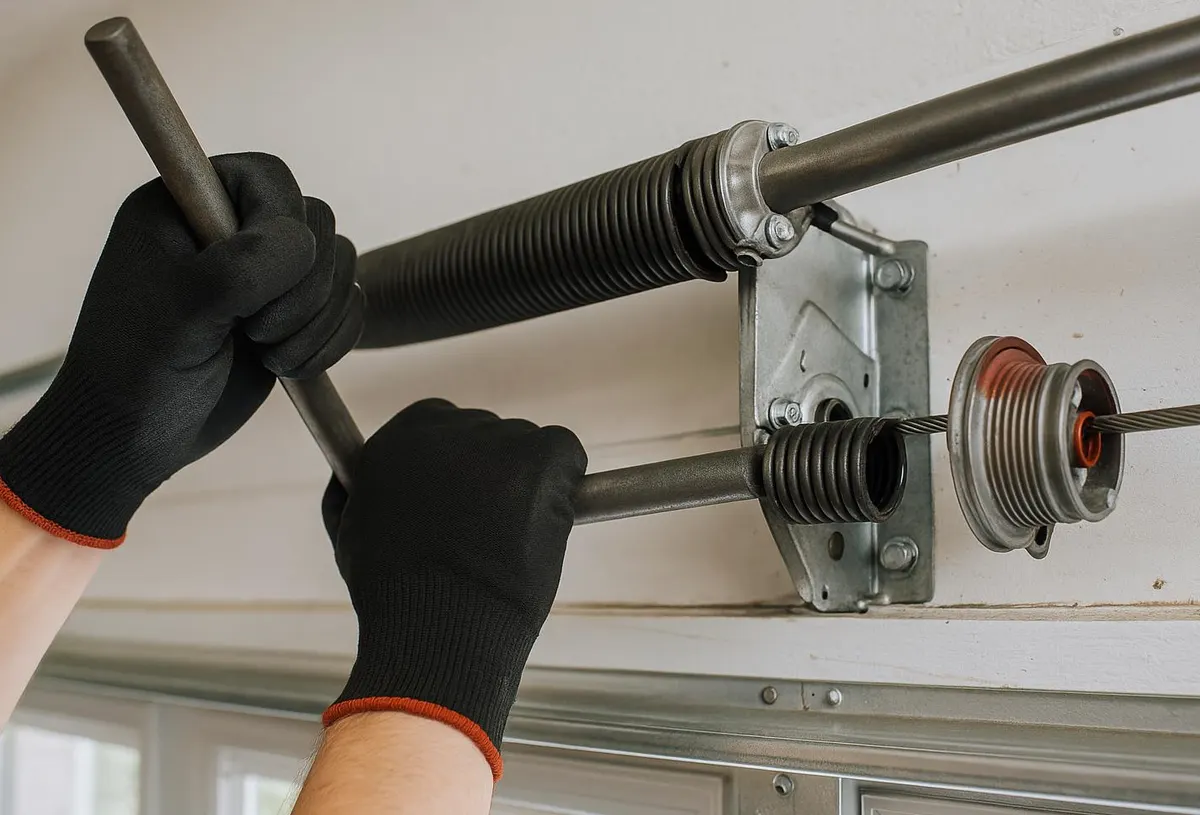
- The door is physically heavy and won't lift even by hand — that's almost always a spring.
Keep that symptom in mind as you work through the list below, because it tells you which cause to suspect first.
The order a technician checks things in
1. Power to the opener
The first thing any technician does is confirm the opener itself is getting power. Garages in this area often share a circuit with outdoor outlets, and a tripped GPFI outlet after heavy rain is one of the most common reasons a door suddenly stops responding. Check the outlet, check the breaker, and look for a plug that's worked loose from the vibration of normal daily use.
2. The remote and the wall control
Dead remote batteries are unglamorous but extremely common. Try the wall-mounted button inside the garage. If the wall button works but the remote doesn't, it's a battery or a reprogramming issue, not a mechanical one. If neither works, move on to the next step.
3. The safety sensors near the floor
Every garage door opener has two small sensors a few inches off the ground, one on each side of the track. If they're dirty, knocked out of alignment, or have a cobweb or pollen film across the lens, the opener will refuse to close the door — and on some models, it will also refuse to open it as a safety default. Humid air and pine debris around garages here make this one of the most frequent culprits, especially in spring and after a stretch of heavy rain. Wipe both lenses with a soft cloth and check that their indicator lights are steady, not blinking.
4. The manual lock or disconnect
If someone engaged the manual lock bar on the inside of the door, or pulled the red emergency release cord, the opener can run all day and the door still won't budge because it's mechanically disconnected from the trolley. This happens more often than people expect, especially after a power outage when someone pulled the cord to open the door by hand and never reconnected it.
5. The track and rollers
Next, a technician looks at the horizontal and vertical tracks for anything blocking the rollers — a dropped tool, a buildup of grime, or a track that's bent or pulled away from the wall. Moisture around garage foundations can cause slow shifting over time, and a track that's even slightly out of alignment can bind the rollers enough to stop the door cold.
6. The springs
If the door won't move even when you try to lift it by hand, the springs have likely failed or lost tension. Springs are under extreme load, and a broken one makes the door too heavy for the opener motor to lift — it's not a motor problem at all, even though that's what it looks like from the switch. Do not try to force the door open or use the opener repeatedly when you suspect a broken spring; it strains the opener and can damage the system further.
7. The opener's internal gear
Last on the list is the opener itself. Older openers have an internal plastic gear that can strip after years of use, especially with a door that's slightly out of balance. You'll usually hear a grinding or clicking sound with little or no movement. This is a repair or replacement decision depending on the opener's age.
When to call Savannah Garage Door
If you've checked power, the remote, and the sensors and the door still won't move, stop troubleshooting and call. A stuck door is often a symptom of something under tension or load that isn't safe to force. Our technicians run through this same checklist on-site, starting with the fastest and most common causes and working toward spring replacement or garage door opener service only if that's what the door actually needs. We'll tell you plainly which it is before any work starts.
If you're in Savannah, Pooler, Richmond Hill, Rincon, Garden City, Port Wentworth, Bloomingdale, or Thunderbolt and your garage door won't open this morning, call Savannah Garage Door — we'll walk the same checklist in person and get your door moving again.